


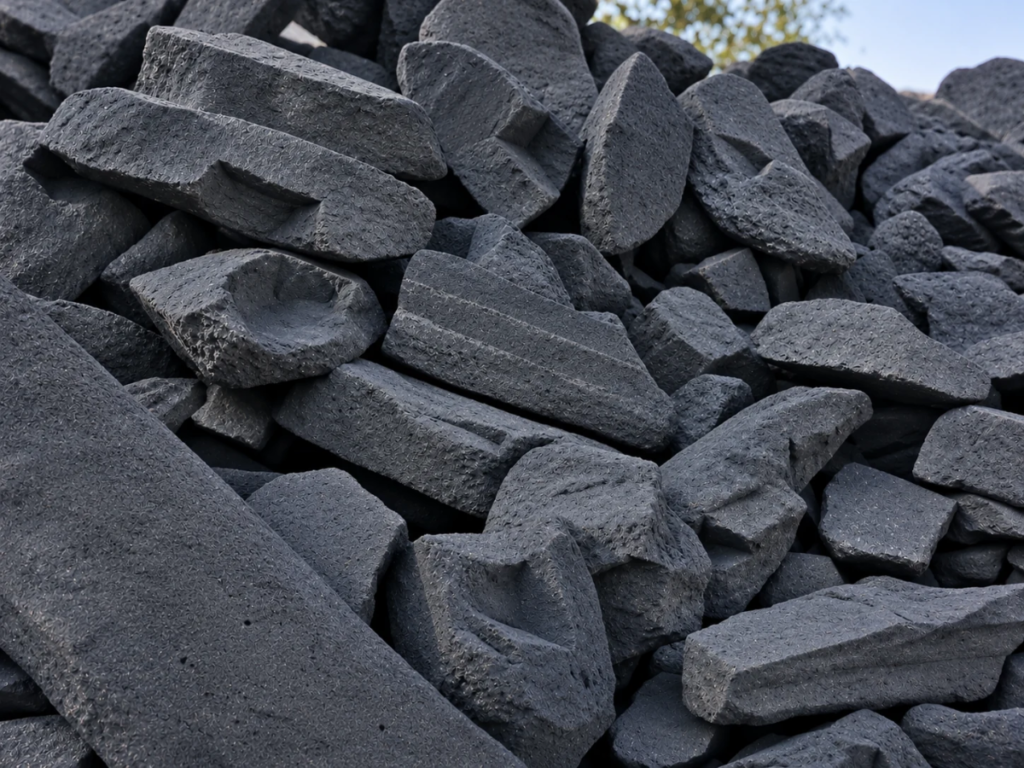
Anode butts, also known as spent carbon anodes, are the carbon remnants recovered when prebaked carbon anodes are replaced in aluminum reduction cells. SATRAD Group supplies this recovered material in lump and particle sizes for suitable smelting and carbon-processing applications.
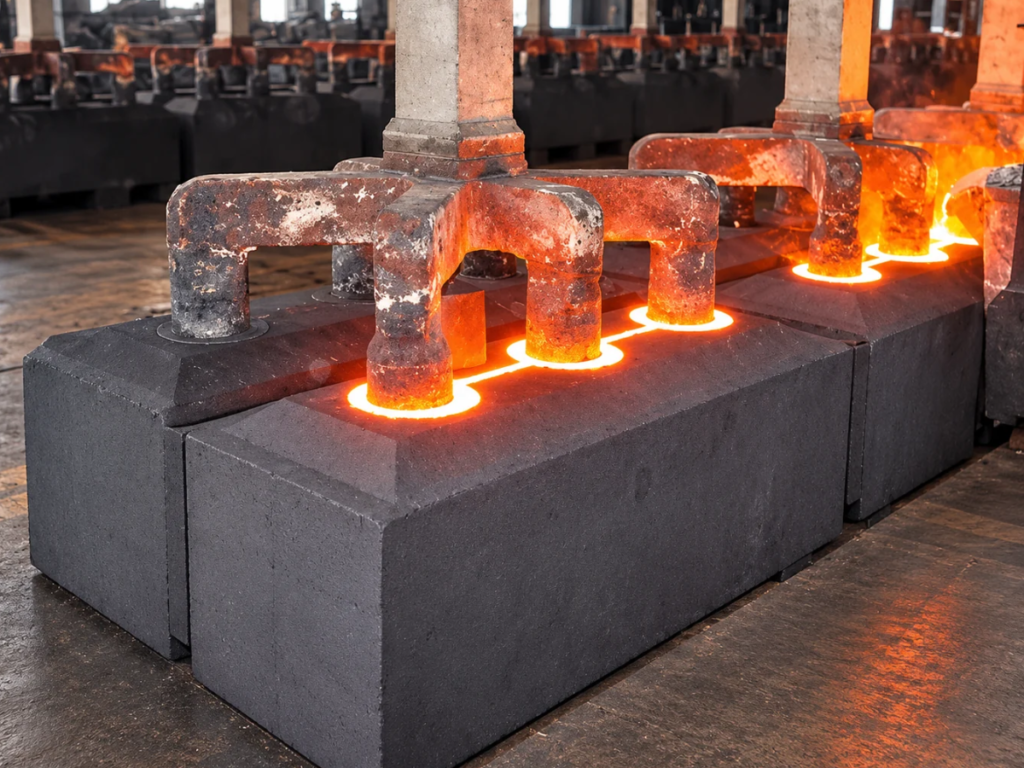
During electrolysis, the carbon anode is gradually consumed and replaced before the remaining block becomes unsuitable for continued operation. As an illustrative example, an anode initially about 600 mm high may be removed with around 120 mm remaining; actual replacement dimensions depend on the cell design and operating practice.
SATRAD Group supplies anode butts sourced from aluminum smelters for recycling and further processing. Material selection should account for carbon content, particle size, cleaning condition and impurities, including residual electrolyte where relevant. For processing and purchasing guidance, see Anode Butt Recycling: Cleaning, Sizing and Quality Control.
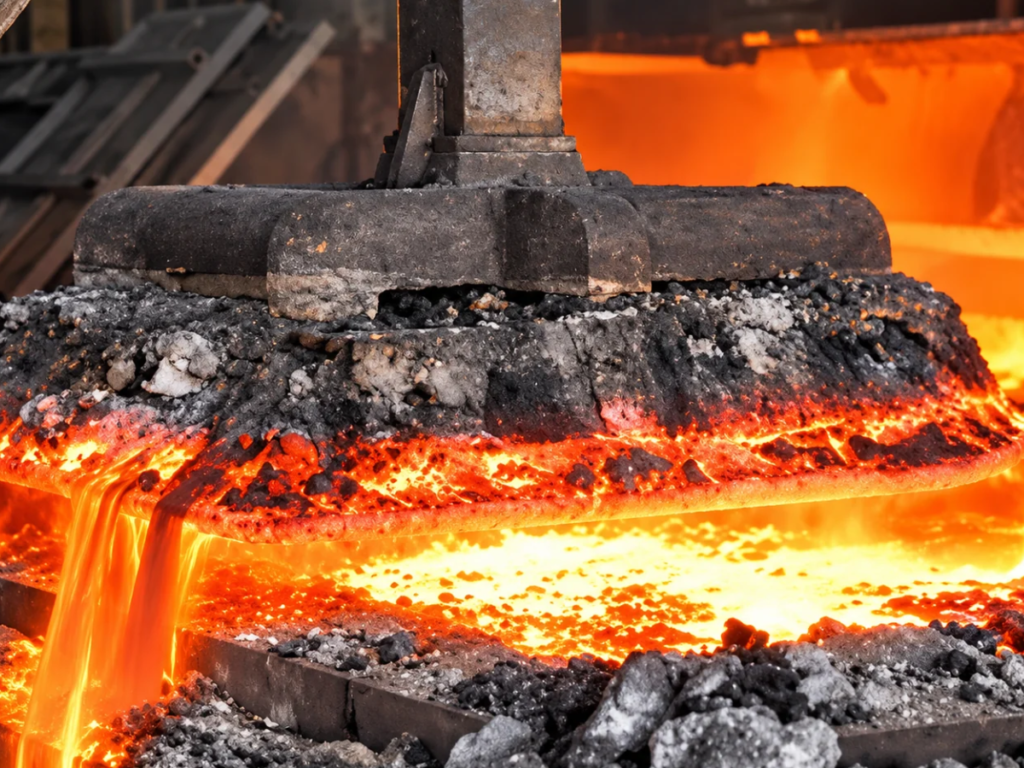
Spent carbon anodes are widely used as an alternative or supplementary carbon fuel in non-ferrous metal smelting, particularly in copper and lead recycling operations.
Conventional metallurgical coke typically contains 80–90% fixed carbon and 10–15% ash. By partially replacing coke with spent anode carbon, smelters may improve thermal efficiency and reduce fuel costs. Depending on material quality and operating conditions, spent anode carbon can offer a higher calorific value than conventional coke.
Different smelting processes require different particle sizes of spent carbon anodes.
Particle size selection should be based on furnace configuration, fuel-bed permeability, combustion characteristics, and process conditions.
Smaller spent anode particles can be screened, washed, dried, and manually sorted to reduce ash, moisture, and impurities.
After appropriate quality control, selected carbon particles may be used as carburizers (recarburizers) in foundry applications, subject to chemical composition and impurity specifications.
Processed spent anode carbon can also serve as a recycled carbon raw material in certain electrode paste formulations. Particle size distribution, fixed carbon content, ash, sulfur, and other impurities must be evaluated to ensure compatibility with production requirements.
In addition to spent anode butts recovered from aluminum smelters, rejected prebaked carbon anodes generated during anode manufacturing can also be recycled and reused.
These rejected anodes, whether due to dimensional defects, surface cracks, or other quality issues, can be crushed and processed for reuse as carbon raw materials in anode production or as alternative fuels in industrial smelting, depending on their quality and suitability. Selected materials may contain approximately 98.5% fixed carbon and 0.5% ash.
For more information, explore our Rejected Prebaked Carbon Anodes product range.
Anode Butts, commonly known as Spent carbon anodes, are residual carbon blocks removed from aluminum reduction cells when they reach the end of their service life. Although partially consumed during electrolysis, they retain a substantial amount of carbon and can be recovered as recyclable industrial carbon materials.
SATRAD Group supplies spent carbon anodes in various lump and particle sizes, including 30–80 mm, 100–200 mm, and larger blocks. Particle sizes can be selected according to specific applications, such as copper smelting, lead smelting, or carbon processing. Availability depends on material specifications and processing requirements.
Key quality parameters include fixed carbon, ash, sulfur, moisture, and impurity content. For spent anode butts, residual electrolyte components, particularly fluorides and sodium compounds, should also be evaluated. SATRAD Group can coordinate material specifications and quality documentation based on customer requirements. See our anode butt quality-control guide for the information to agree before purchase.
Looking for a reliable supply of anode butts (spent carbon anodes)? SATRAD Group offers various lump and particle sizes to meet your smelting, foundry, and carbon processing requirements.
Contact us with your required particle size, quantity, quality specifications, and delivery destination. Email info@satradco.com or use the enquiry form below to discuss availability and receive a quotation.

Scan the QR code to chat with us