



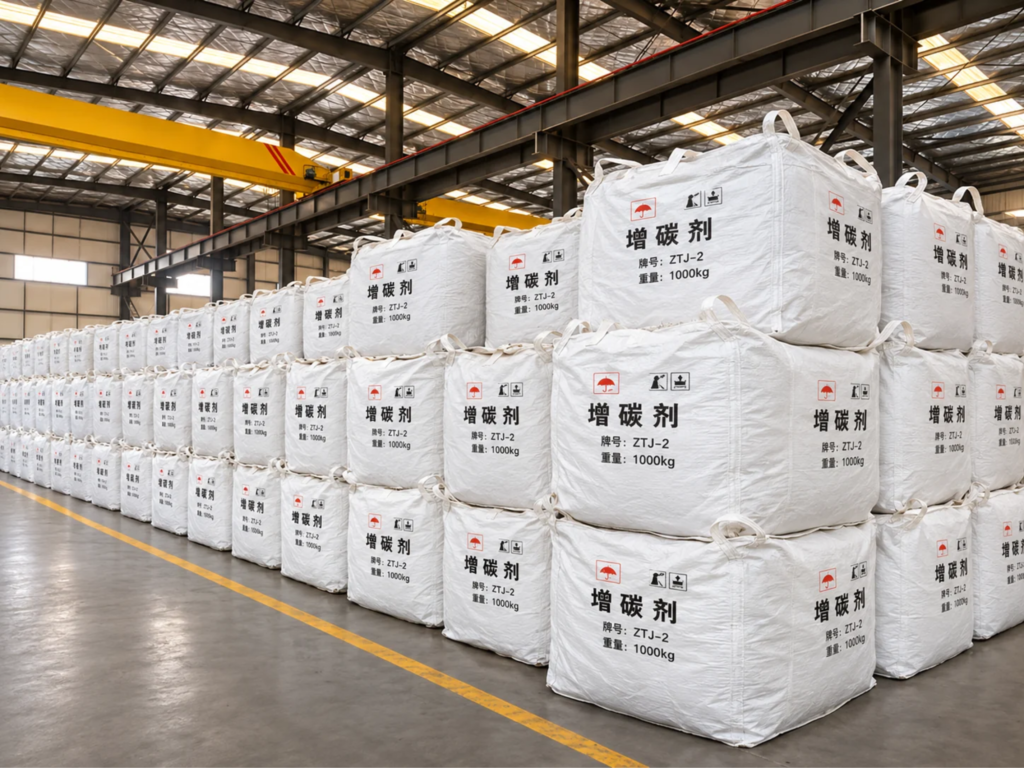
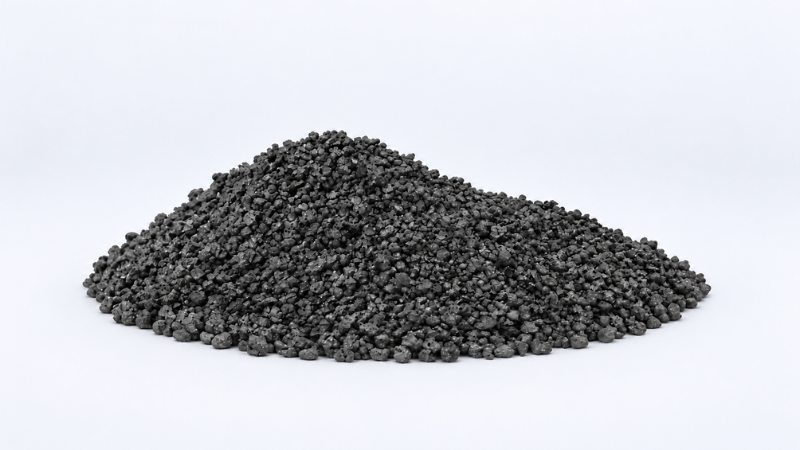
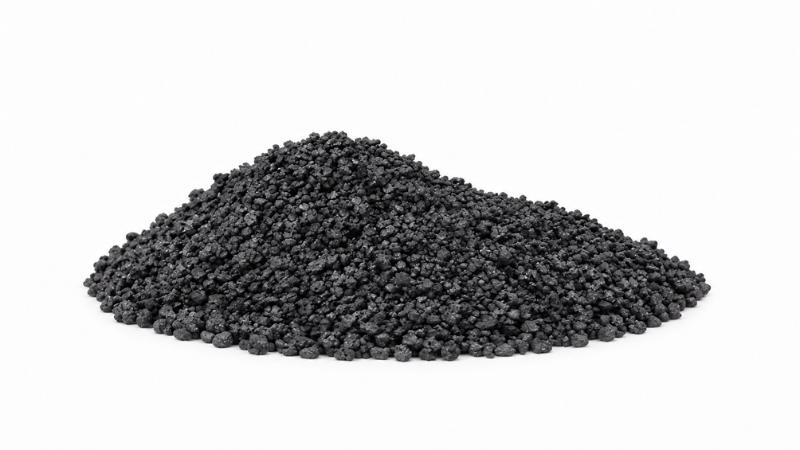
Foundry carburizers are carbonaceous materials used to increase and adjust the carbon content of molten iron and steel during melting. In foundry operations, they help improve steel scrap utilization and reduce or partially replace the need for pig iron.
Foundry carburizers are used to compensate for carbon loss during melting and adjust the carbon content of molten iron. Selected carburizers can also promote graphite nucleation, helping improve the microstructure and mechanical properties of cast iron. They support more efficient steel scrap utilization and reduce the need for pig iron in foundry production. Foundry carburizers are widely used in the production of gray iron and ductile iron castings.
Raw materials used for foundry carburizers include artificial graphite, petroleum coke, natural graphite, coke, and anthracite.
Artificial graphite carburizers can be manufactured using high-quality powdered calcined petroleum coke as the primary raw material, with coal tar pitch as a binder and small amounts of other additives. The materials are mixed, pressed into shape, and graphitized at 2,500–3,000°C under a non-oxidizing atmosphere.
Petroleum coke is a by-product of crude oil refining and is widely used as a raw material for carburizers after calcination. Calcined petroleum coke carburizers are produced by heating raw petroleum coke to approximately 1,200–1,350°C. The calcination process removes moisture and volatile matter and reduces certain impurities. Calcined petroleum coke generally contains higher levels of sulfur and nitrogen, while graphitized petroleum coke offers improved properties through additional high-temperature processing.
Medium-carbon flake graphite is primarily used, although its application as a foundry carburizer is relatively limited.
Coke and anthracite generally have higher ash and volatile matter contents. They are mainly used in electric arc furnace steelmaking and are less commonly used in induction furnace melting of cast iron.
| Available Particle Sizes | 0.2–1.0 mm | 1.0–3.0 mm | 3.0–5.0 mm | 5.0–10.0 mm |
|---|---|
| Packaging | 10 kg, 25 kg, 40 kg, and 1,000 kg into jumbo bags or pallets. |
| Material | Grade | Fixed Carbon ≥ % | Ash ≤ % | Volatile Matter ≤ % | Moisture ≤ % | Sulfur ≤ % | Nitrogen ≤ % |
| Graphite Carburizer | GR-1 | 99.20 | 0.40 | 0.40 | 0.20 | 0.03 | 0.015 |
| GR-2 | 98.50 | 1.00 | 0.50 | 0.50 | 0.05 | 0.03 | |
| Petroleum Coke Carburizer | GR-1 | 98.50 | 1.00 | 0.50 | 0.50 | 0.30 | 0.20 |
| GR-2 | 98.00 | 1.00 | 1.00 | 0.50 | 0.50 | 1.00 | |
| Other Carbonaceous Carburizers | GR-1 | 95.00 | 4.00 | 1.00 | 0.50 | 0.25 | 0.50 |
| GR-2 | 92.00 | 6.00 | 1.50 | 0.50 | 0.30 | 0.60 | |
| GR-3 | 90.00 | 8.00 | 1.50 | 0.50 | 0.30 | 0.70 |
Key factors include fixed carbon content, sulfur, nitrogen, ash, volatile matter, and degree of graphitization. A higher degree of graphitization generally promotes carbon dissolution and absorption in molten iron. Consistent chemical composition and batch-to-batch quality are also important.
Graphitized carburizers undergo high-temperature graphitization, resulting in a more ordered carbon structure. They generally offer better carbon absorption characteristics and, depending on the raw materials and processing conditions, lower sulfur and nitrogen levels than calcined petroleum coke.
Please provide the carburizer type, required grade, chemical specifications (fixed carbon, sulfur, nitrogen, etc.), particle size, quantity, delivery destination, and any specific packaging or inspection requirements.
Send your inquiry to info@satradco.com for a quotation and technical support.

Scan the QR code to chat with us