



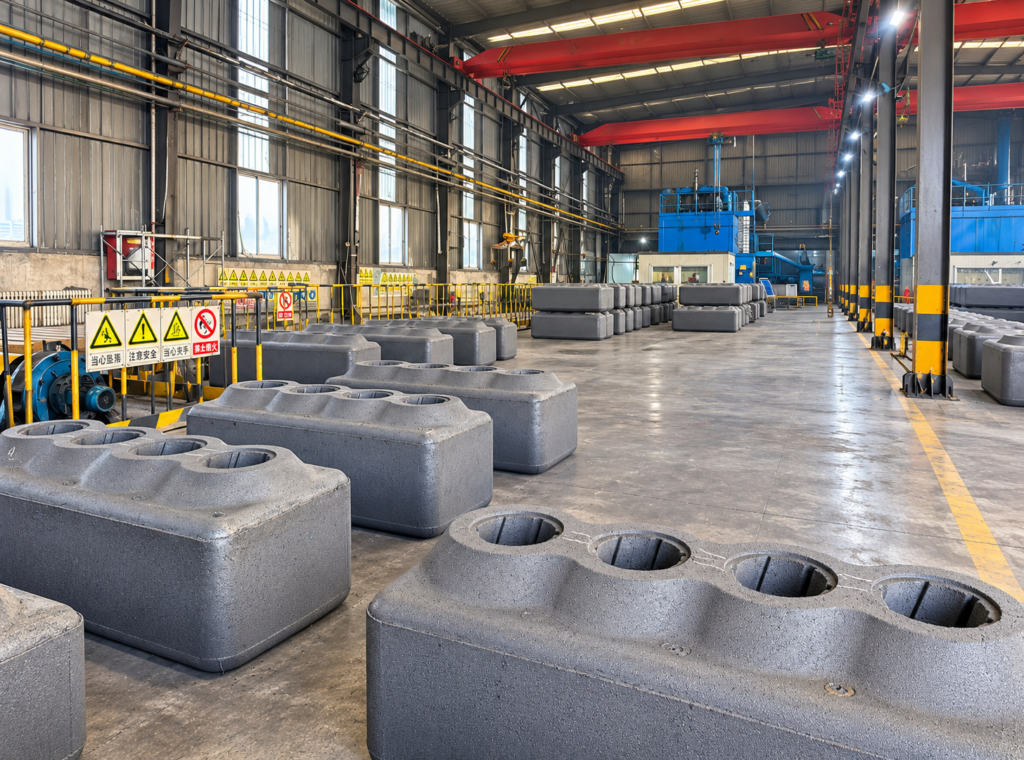
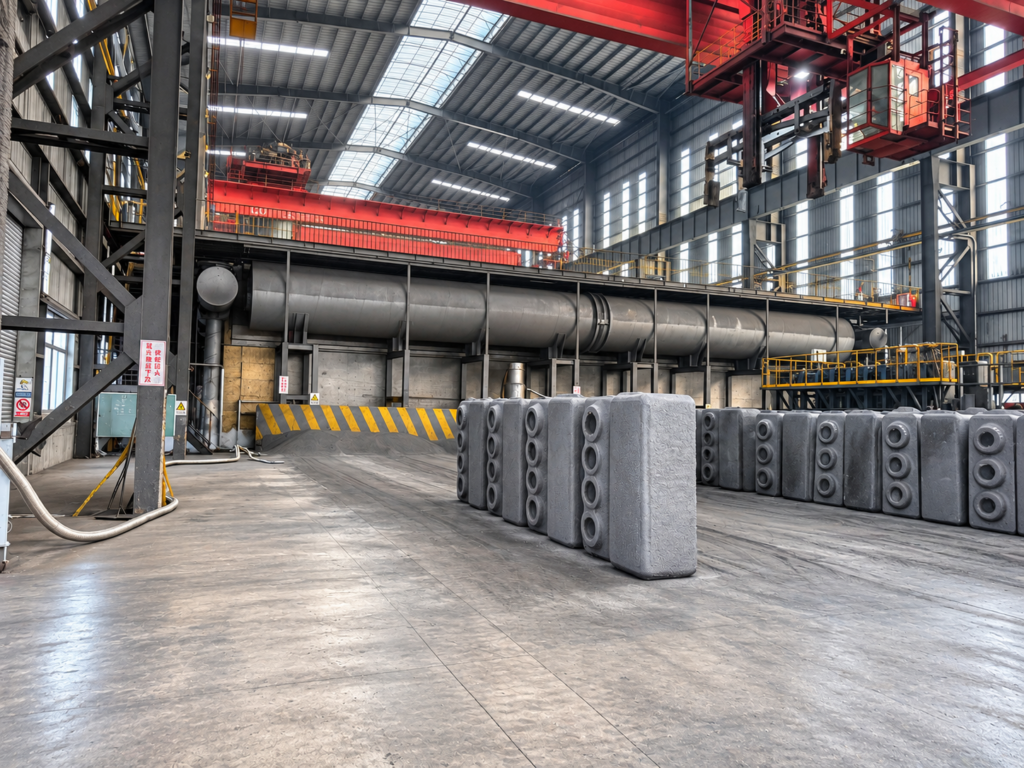
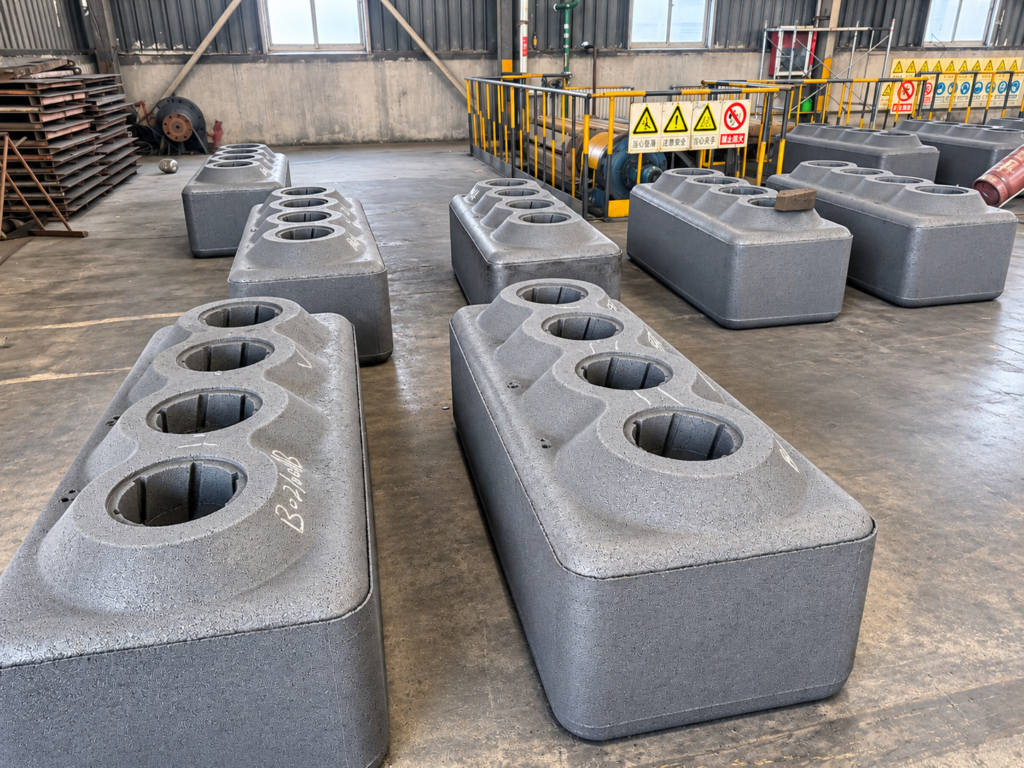
Prebaked Carbon Anodes are manufactured from petroleum coke as the aggregate and coal tar pitch as the binder. They are used as consumable anodes in prebaked aluminum reduction cells employing the Hall–Héroult process. During electrolysis, the anodes conduct electrical current into the alumina–cryolite molten electrolyte and participate in electrochemical reactions during aluminum production.
SATRAD supplies prebaked carbon anodes for primary aluminum smelting, with specifications tailored to different electrolytic cell requirements.
Prebaked carbon anodes are evaluated based on their physical, mechanical, electrical, and chemical properties, which are important for their performance in aluminum electrolysis. The table below presents the technical requirements for TY-1 and TY-2 grades, including density, mechanical strength, electrical resistivity, CO₂ reactivity residue, thermal expansion, and ash content.
Physical and Chemical Properties
| Properties | Unit | TY-1 | TY-2 |
| Bulk Density | g/cm³ | ≥1.56 | ≥1.53 |
| True Density | g/cm³ | ≥2.05 | ≥2.03 |
| Compressive Strength | MPa | ≥35 | ≥32 |
| CO₂ Reactivity (Residue Rate) | % | ≥85 | ≥80 |
| Flexural Strength | MPa | ≥9 | ≥8 |
| Electrical Resistivity at Room Temperature | μΩ·m | ≤57 | ≤62 |
| Coefficient of Thermal Expansion | K⁻¹ | ≤4.5 × 10⁻⁶ | ≤5.0 × 10⁻⁶ |
| Ash Content | % | ≤0.5 | ≤0.7 |
Note: ≥ indicates the minimum required value; ≤ indicates the maximum permitted value.
Additional Technical Requirements
Where specific requirements apply to physical and chemical properties not listed in the Table, including thermal conductivity, elastic modulus, air reactivity, air permeability, and trace element contents (sulfur, vanadium, nickel, silicon, iron, sodium, calcium, and titanium), such requirements shall be determined by mutual agreement between the supplier and purchaser and specified in the purchase order or contract.
Prebaked carbon anodes are manufactured through a sequence of raw material preparation, calcination, mixing, forming, baking and inspection. Petroleum coke provides the main aggregate, while coal tar pitch binds the particles together. Each stage contributes to the properties required for aluminium electrolysis.
Petroleum coke is crushed, screened, and calcined before being blended with coal tar pitch to produce an anode paste. The paste is formed into green anode blocks and baked under controlled conditions to carbonize the binder. After cooling, the anodes undergo dimensional inspection, any required machining, and quality testing to meet specified requirements.
For a step-by-step visual guide to each production stage, explore our Prebaked Carbon Anode Manufacturing Process.
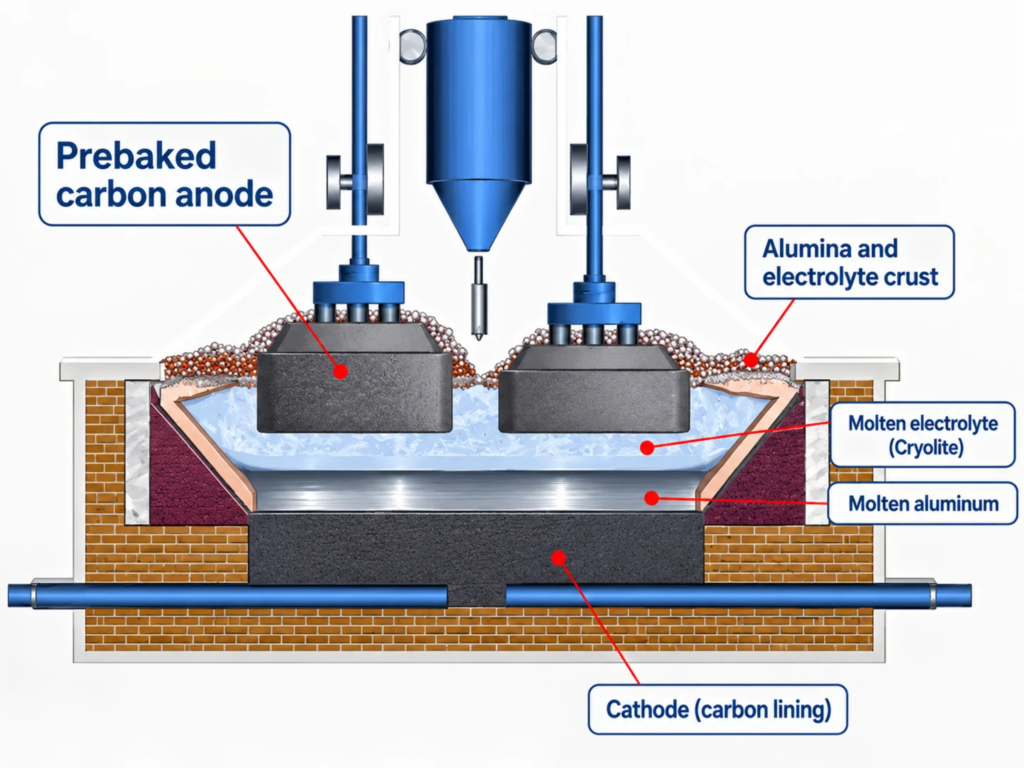
Prebaked carbon anodes are used in aluminum electrolytic cells to conduct electricity and support aluminum production.
Spent anode carbon can be recycled as raw material for producing new carbon anodes.
Carbon anode materials can also be used as reducing agents in certain metallurgical processes.
Prebaked carbon anodes are manufactured from calcined petroleum coke(CPC) as the main aggregate and coal tar pitch as the binder.
Key indicators include bulk density, real density, electrical resistivity, compressive strength, CO₂ reactivity, air reactivity, thermal expansion, ash and sulfur content.
We produce prebaked anodes fully customized to customer drawings, tailored for different reduction cell technologies.
Net anode consumption is mainly affected by anode reactivity, anode quality, cell current efficiency and pot operating conditions.
Yes. Anode dimensions and technical properties can be specified according to the requirements of different aluminum reduction cells.
SATRAD supplies prebaked carbon anodes for primary aluminum smelting applications, with specifications tailored to different electrolytic cell requirements.
Please provide the anode dimensions, technical specifications, required quantity, delivery destination, and any additional quality or inspection requirements. You can send your inquiry directly to our sales team at info@satradco.com for a quotation and technical assistance.

Scan the QR code to chat with us