



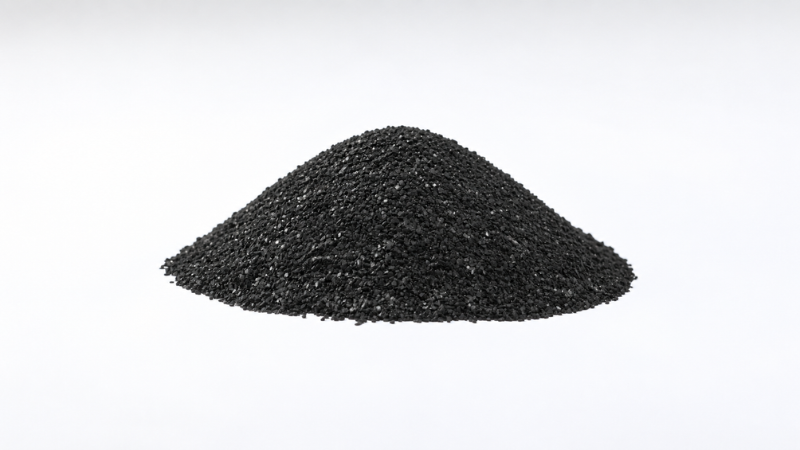
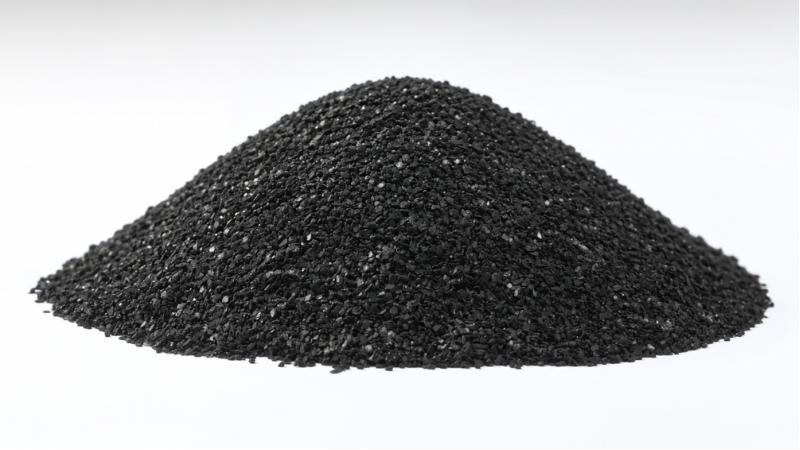
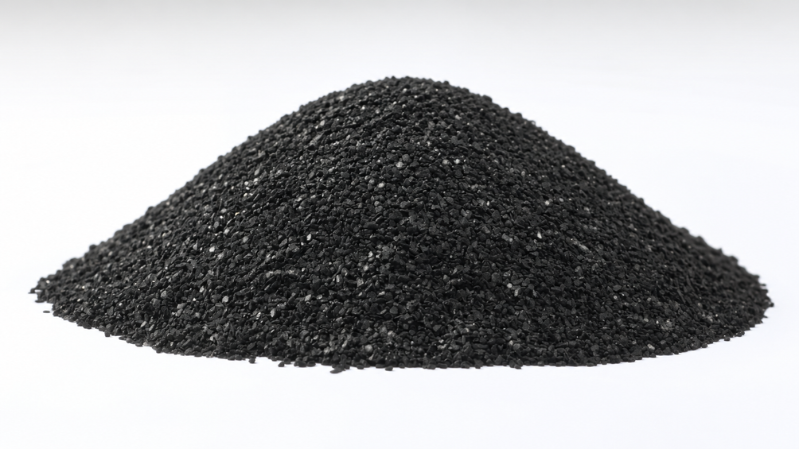
Cathode ramming paste is a carbon material for cathode lining building, gap filling and collector bar groove ramming of aluminum reduction cells. It works with cathode carbon blocks to form the pot bottom.
Cathode ramming paste is made from calcined anthracite, graphite, metallurgical coke and coal pitch-coal tar binder. It is divided into cold (≤25°C), Tepid ramming paste (25–50°C) and hot ramming paste (~100°C) by working temperature. Cold ramming paste dominates the market for its good conductivity and easy construction.
| Material | Paste Type | Application Position | Working Temp. (°C) |
| Hot ramming paste | Peripheral seam paste | Fills wide gaps between GS-1 bottom cathode blocks, GS-C side carbon blocks and refractory bricks | 110 ± 10 |
| Inter-block joint paste | Fills gaps between adjacent GS-1 cathode carbon blocks | ||
| Collector bar groove paste | Fills gaps between cathode steel collector bars and GS-1 carbon blocks | ||
| Peripheral seam paste | Fills wide gaps between GS-3, GS-5, GS-10 bottom cathode blocks, GS-C side carbon blocks and refractory bricks | ||
| Inter-block joint paste | Fills gaps between adjacent GS-3, GS-5 and GS-10 cathode carbon blocks | ||
| Collector bar groove paste | Fills gaps between cathode steel collector bars and GS-3, GS-5 and GS-10 carbon blocks | ||
| Tepid ramming paste | Lining joint paste | Fills gaps between GS-1 bottom cathode blocks, GS-C side carbon blocks, refractory bricks, and gaps between adjacent GS-1 carbon blocks | Room temp. to 55 |
| Collector bar groove paste | Fills gaps between cathode steel collector bars and GS-1 carbon blocks | ||
| Lining joint paste | Fills gaps between GS-3, GS-5, GS-10 bottom cathode blocks, GS-C side carbon blocks, refractory bricks, and gaps between adjacent GS-3, GS-5, GS-10 carbon blocks | ||
| Collector bar groove paste | Fills gaps between cathode steel collector bars and GS-3, GS-5 and GS-10 carbon blocks | ||
| Cold ramming paste | Lining joint paste | Filling joints between GS-1, GS-3, GS-5, GS-10 or SMH bottom carbon blocks, GS-C sidewall carbon blocks and refractory materials, as well as joints between the carbon blocks. | 17–42 |
| Collector bar groove paste | Fills gaps between cathode steel collector bars and GS-1 / GS-3 / GS-5 / GS-10 / SMH carbon blocks | ||
| Carbon sidewall mortar | — | Fills small gaps between GS-C side carbon blocks | 60 ± 10 |
GS-3, GS-5 and GS-10 are all graphitic cathode carbon blocks for the bottom lining of aluminum reduction cells. The three designations differ in their nominal artificial graphite content in the dry mix formulation: 30% for GS-3, 50% for GS-5, and 100% for GS-10.
GSC Graphitic cathode carbon blocks used for the sidewall lining of aluminum reduction cells.
SMH represent Graphitized cathode carbon blocks.
| Category | Paste Type | Applicable Cathode Blocks | Electrical Resistivity (μΩ·m, max.) | Working Temp. (°C) | Volatile Matter (%, range) | Baking Weight Loss (%, max.) | Compressive Strength (MPa, min.) | Apparent Density (g/cm³, min.) | True Density (g/cm³, min.) | Ash Content (%, max.) | Expansion / Shrinkage ΔLₐ–ΔLᵦ (%, max.) | Expansion / Shrinkage ΔLₐ–ΔL꜀ (%, max.) |
| Hot ramming paste | Peripheral seam paste | Fills wide gaps between GS-1 bottom cathode blocks, GS-C side carbon blocks and refractory bricks | — | 110 ± 10 | 7–11 | — | 17 | 1.46 | 1.87 | 7 | 0.85 | 0.95 |
| Inter-block joint paste | Fills gaps between adjacent GS-1 cathode carbon blocks | 72 | 8–12 | — | 18 | 1.44 | 1.87 | 7 | 0.85 | 0.95 | ||
| Collector bar groove paste | Fills gaps between cathode steel collector bars and GS-1 carbon blocks | 72 | 9–14 | — | 25 | 1.46 | 1.89 | 4 | 0.75 | 0.85 | ||
| Peripheral seam paste | Fills wide gaps between GS-3, GS-5, GS-10 bottom cathode blocks, GS-C side carbon blocks and refractory bricks | — | 7–12 | — | 16 | 1.48 | 1.92 | 5 | 0.55 | 0.65 | ||
| Inter-block joint paste | Fills gaps between adjacent GS-3, GS-5 and GS-10 cathode carbon blocks | 65 | 8–13 | — | 16 | 1.48 | 1.92 | 5 | 0.80 | 0.95 | ||
| Collector bar groove paste | Fills gaps between cathode steel collector bars and GS-3, GS-5 and GS-10 carbon blocks | 65 | 9–14 | — | 20 | 1.48 | 1.92 | 3 | 0.70 | 0.85 |
Notes: ΔLₐ represents expansion/shrinkage at the end of the paste setting period (stable or maximum value); ΔLᵦ represents expansion/shrinkage at the highest temperature during heating (950°C); and ΔL꜀ represents expansion/shrinkage after holding at 950°C for 3 hours.
| Category | Paste Type | Applicable Cathode Blocks | Electrical Resistivity (μΩ·m, max.) | Working Temp. (°C) | Volatile Matter (%, range) | Baking Weight Loss (%, max.) | Compressive Strength (MPa, min.) | Apparent Density (g/cm³, min.) | True Density (g/cm³, min.) | Ash Content (%, max.) | Expansion / Shrinkage ΔLₐ–ΔLᵦ (%, max.) | Expansion / Shrinkage ΔLₐ–ΔL꜀ (%, max.) |
| Tepid ramming paste | Lining joint paste | Fills gaps between GS-1 bottom cathode blocks, GS-C side carbon blocks, refractory bricks, and gaps between adjacent GS-1 carbon blocks | — | Room temp. to 55 | 9–13 | — | 18 | 1.44 | 1.87 | 7 | 0.70 | 1.04 |
| Collector bar groove paste | Fills gaps between cathode steel collector bars and GS-1 carbon blocks | 72 | 9–13 | — | 20 | 1.48 | 1.88 | 6 | 0.70 | 1.04 | ||
| Lining joint paste | Fills gaps between GS-3, GS-5, GS-10 bottom cathode blocks, GS-C side carbon blocks, refractory bricks, and gaps between adjacent GS-3, GS-5, GS-10 carbon blocks | — | 9–13 | — | 16 | 1.46 | 1.89 | 5 | 0.68 | 1.02 | ||
| Collector bar groove paste | Fills gaps between cathode steel collector bars and GS-3, GS-5 and GS-10 carbon blocks | 65 | 9–13 | — | 18 | 1.48 | 1.90 | 4 | 0.68 | 1.02 |
ᵇ The electrical resistivity requirement for LDNH applies only to lining paste used for filling joints between bottom carbon blocks.
Selection note: For hot and warm ramming paste, the GS-1 rows correspond to the original BS-series grades; the GS-3 / GS-5 / GS-10 rows correspond to the original GS-series grades. Cold ramming paste rows cover the indicated block types. Verify final selection against the applicable standard and installation requirements.
| Category | Paste Type | Applicable Cathode Blocks | Electrical Resistivity (μΩ·m, max.) | Working Temp. (°C) | Volatile Matter (%, range) | Baking Weight Loss (%, max.) | Compressive Strength (MPa, min.) | Apparent Density (g/cm³, min.) | True Density (g/cm³, min.) | Ash Content (%, max.) | Expansion / Shrinkage ΔLₐ–ΔLᵦ (%, max.) | Expansion / Shrinkage ΔLₐ–ΔL꜀ (%, max.) |
| Cold ramming paste | Lining joint paste | Filling joints between GS-1, GS-3, GS-5, GS-10 or SMH bottom carbon blocks, GS-C sidewall carbon blocks and refractory materials, as well as joints between the carbon blocks. | 75ᵇ | 17–42 | — | 10 | 16 | 1.44 | 1.86 | 5 | 0.55 | 0.70 |
| Collector bar groove paste | Fills gaps between cathode steel collector bars and GS-1 / GS-3 / GS-5 / GS-10 / SMH carbon blocks | 65 | — | 13 | 16 | 1.44 | 1.88 | 5 | 0.55 | 0.70 |
Cathode ramming paste fills and seals the joints between bottom cathode blocks and sidewall carbon blocks. After proper compaction and baking, it forms a dense carbonaceous joint that helps prevent molten aluminum and electrolyte from penetrating the cathode lining, protecting the underlying structure.
Sealing performance depends on the paste formulation, particle size distribution, installation temperature, compaction quality, and baking conditions. Proper selection and installation help produce dense, stable joints that resist molten aluminum and electrolyte penetration throughout cell operation.
Grooves and serrated edges increase the contact area between cathode carbon blocks and ramming paste. They also provide mechanical interlocking, helping secure the blocks, reduce relative movement, and maintain joint stability during furnace operation.
Please provide the required ramming paste type, application position, applicable cathode block grade, required quantity, delivery destination, and any specific technical or packaging requirements.
Send your inquiry to info@satradco.com for a quotation and technical support.

Scan the QR code to chat with us