



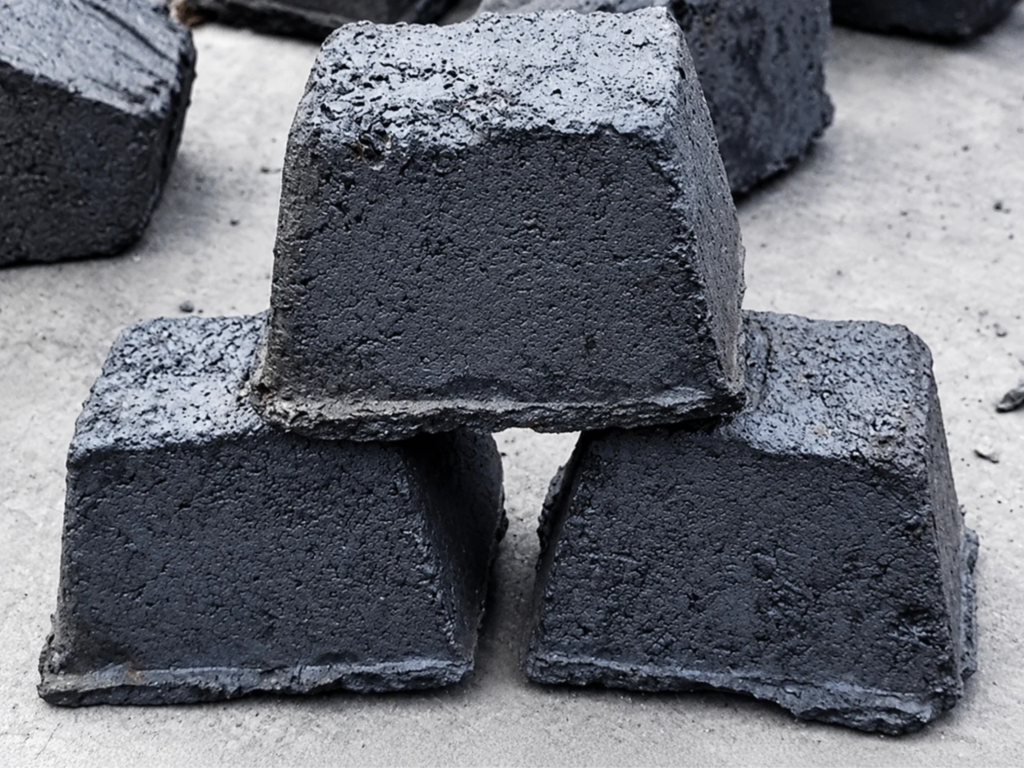

Electrode paste is a carbon-based material used to form self-baking electrodes in submerged arc furnaces (SAFs), particularly in ferroalloy and calcium carbide production.
Electrode paste is used in self-baking electrodes for submerged arc furnaces in ferroalloy and calcium carbide production. It is manufactured by blending carbonaceous raw materials, such as recycled anode granules, calcined petroleum coke, and graphite powder, with coal tar pitch.
| Packaging | Jumbo Bags |
|---|---|
| Minimum Order Quantity (MOQ) | 20 MT |
| Production Capacity | 1,500 MT per month |
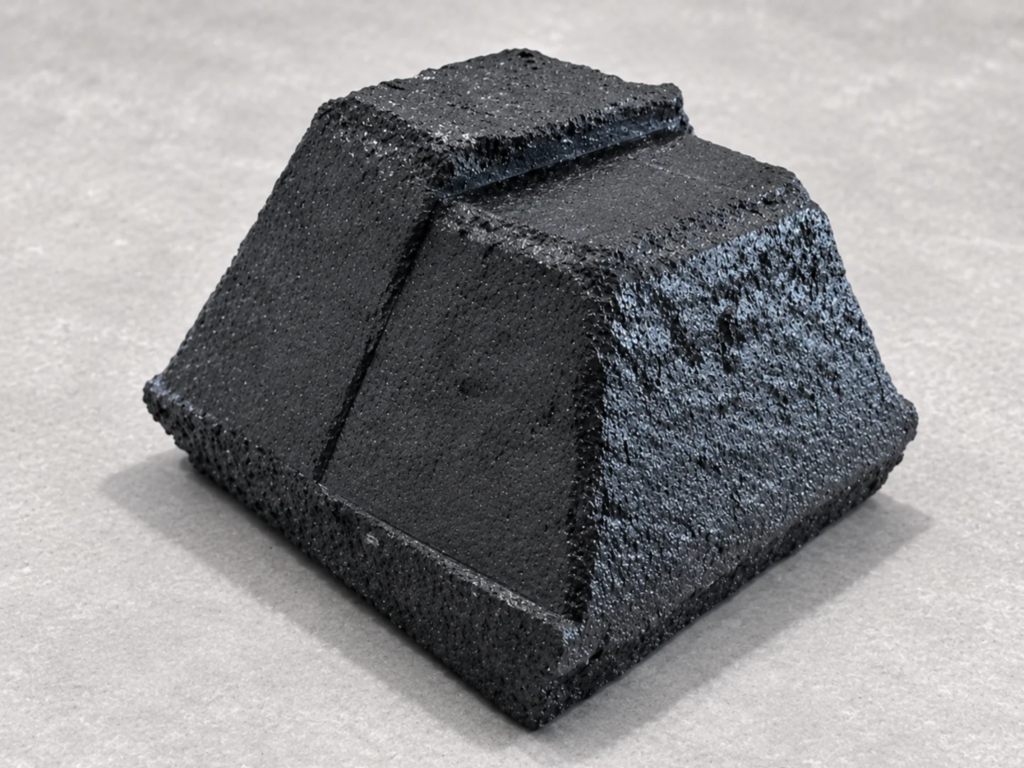
| Product Forms | Available in cast trapezoidal blocks, spherical blocks, and other shapes according to customer requirements. |
| Special Requirements | Customized technical specifications and other requirements are subject to mutual agreement between the supplier and purchaser. |
| Properties | Grade 1 | Grade 2 | Grade 3 | Grade 4 | Grade 5 |
| Ash Content (%, max.) | 3.0 | 4.0 | 5.0 | 6.0 | 7.0 |
| Volatile Matter (%) | 9.5–15.5 | 9.5–15.5 | 9.5–15.5 | 9.5–15.5 | 9.5–15.5 |
| Compressive Strength (MPa, min.) | 19 | 20 | 21 | 22 | 22 |
| Electrical Resistivity (μΩ·m, max.) | 63 | 65 | 70 | 75 | 78 |
| Bulk Density (g/cm³, min.) | 1.40 | 1.40 | 1.40 | 1.40 | 1.40 |
| Elongation (%) | 5–20 | 5–20 | 5–30 | 10–40 | 10–40 |
| Recommended Furnace Capacity (kVA) | ≥40,000 | ≥40,000 | 25,000–40,000 | 25,000–40,000 | ≤25,000 |
Note: Elongation is provided for reference only. Special requirements are subject to agreement between the supplier and purchaser.
Electrode paste is manufactured from selected carbonaceous raw materials, including calcined anthracite, calcined petroleum coke (CPC), recycled anode material, and graphite powder. These materials are crushed, screened, and ground to the required particle sizes before being proportioned according to the formulation.
The prepared aggregates are then preheated and hot-kneaded with coal tar pitch as the binder to produce a homogeneous carbon paste with suitable flow properties and plasticity. The hot paste is subsequently cast into specified shapes and dimensions, such as trapezoidal or spherical blocks, and cooled before inspection and packaging.
During furnace operation, electrode paste is continuously charged into the electrode casing from the top. As the electrode descends, the paste is progressively heated, softens, flows, and undergoes baking (carbonization), forming a solid, electrically conductive electrode. The baked electrode conducts electrical current to the furnace charge and is gradually consumed during smelting.
Electrode paste is primarily used in self-baking electrodes for submerged arc furnaces (SAFs) and other electric furnaces. Its main applications include:
Ash content directly affects the oxidation behavior and consumption rate of electrode paste. Higher ash content, particularly when it contains catalytic elements such as calcium, sodium, and vanadium, may accelerate carbon oxidation and increase electrode consumption. Low ash content is therefore desirable for reducing consumption and operating costs.
Electrical resistivity directly affects electrical energy losses during current transmission through the electrode. Lower resistivity reduces voltage drop and associated electrical losses, helping improve electrical efficiency during furnace operation.
The thermal expansion coefficient influences the thermal stresses developed within the electrode during heating and cooling. Excessive thermal stress may cause cracking and increase the risk of electrode breakage. Adequate compressive strength helps the electrode withstand mechanical and thermal stresses, reducing the risk of premature fracture during operation.
SATRAD supplies self-baking electrode paste for submerged arc furnaces used in ferroalloy, calcium carbide, and silicon metal production.
Please provide the required grade, furnace capacity, electrode dimensions, preferred product shape, order quantity, delivery destination, and any specific technical or inspection requirements. Send your inquiry to info@satradco.com for a quotation and technical assistance.

Scan the QR code to chat with us