



Graphitized recarburizer is produced from calcined petroleum coke through high-temperature treatment in a graphitization furnace. During this process, the carbon structure becomes more graphitic, while impurities such as sulfur and ash-forming constituents are reduced. The resulting material is a high-purity carbon product, also known as synthetic graphite. When used as a recarburizer, it is commonly referred to as a low-sulfur, low-nitrogen recarburizer.
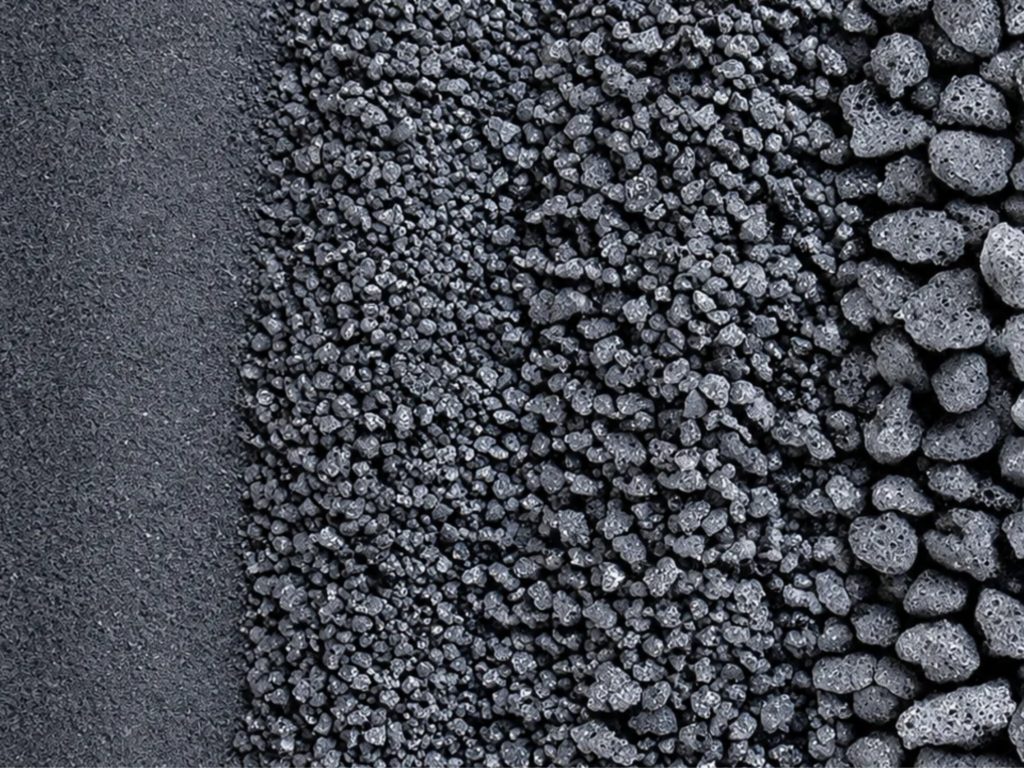
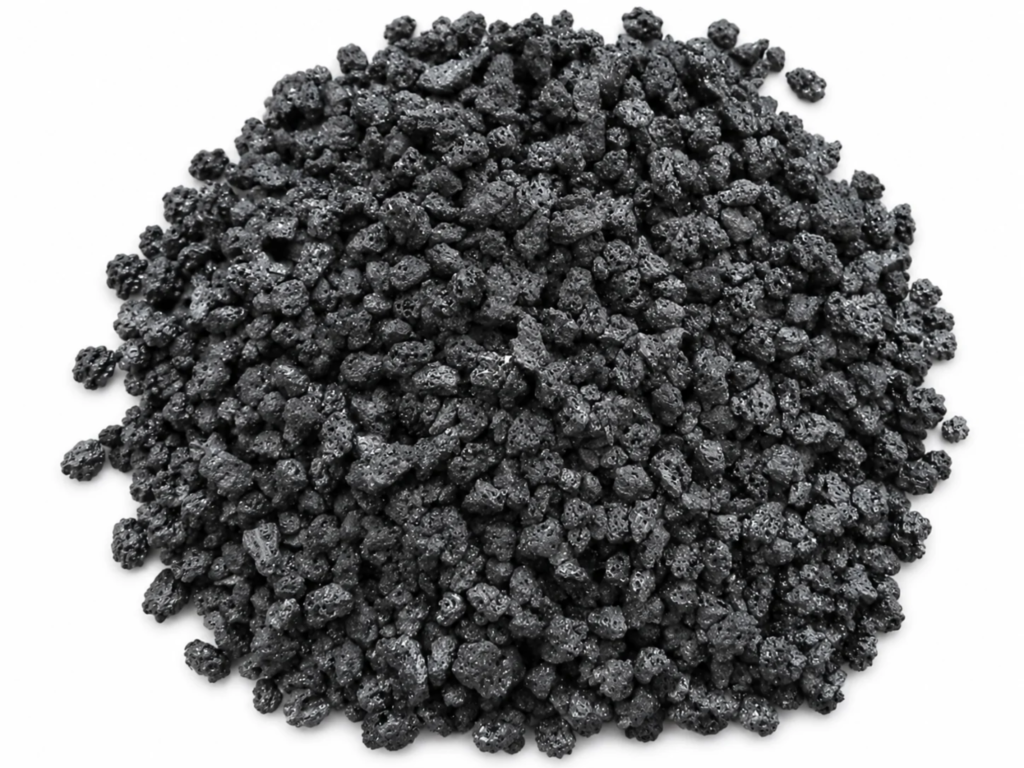
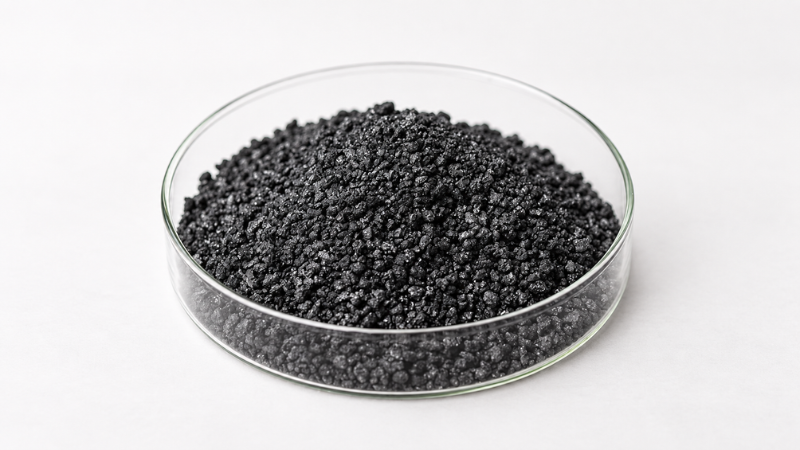
The product consists of gray-black granules, with a visible honeycomb-like porous structure in larger particles. It is available in various particle sizes and packaging options to meet different application and handling requirements, as detailed below.
| Particle Size and Packaging |
|---|
| Available particle sizes include 0–1 mm, 0.5–5 mm, 0.5–10 mm, 1–5 mm, and 5–10 mm to meet different application requirements. Customized particle sizes are also available upon request. |
| Products are available in small and bulk packaging. Small bags are available in net weights of 5, 10, 20, 25, and 30 kg. Bulk bags are available with a net weight of 1,000 kg. |
Chemical composition (% by mass)
| Grade | Fixed Carbon ≥ | Ash ≤ | Volatile Matter ≤ | Moisture ≤ | Sulfur ≤ | Nitrogen ≤ |
| Special Grade | 99.7 | 0.15 | 0.15 | 0.2 | 0.01 | 0.002 |
| Grade 1 | 99.5 | 0.20 | 0.30 | 0.3 | 0.02 | 0.015 |
| Grade 2 | 99.0 | 0.50 | 0.50 | 0.5 | 0.03 | 0.020 |
| Grade 3 | 98.5 | 1.00 | 0.50 | 0.5 | 0.05 | 0.030 |
Note: All values are mass fractions. Except for moisture.
Graphitized recarburizers undergo high-temperature graphitization, resulting in a fixed carbon content of over 98%, low sulfur and nitrogen levels, and low ash content. They offer efficient carbon dissolution and consistent carbon recovery, making them a preferred carbon additive for the production of ductile iron castings, wind turbine components, automotive brake discs, engine blocks, and specialty steels. They are increasingly used in foundries seeking improved carbon control and higher-quality castings.
The main difference lies in the processing temperature and carbon structure. Graphitized recarburizers undergo high-temperature graphitization, typically at approximately 2,500–3,000°C, while CPC is produced by calcination at lower temperatures. Graphitized recarburizers generally offer lower sulfur and nitrogen levels and a higher degree of graphitization.
Available particle sizes include 0–1 mm, 0.5–5 mm, 0.5–10 mm, 1–5 mm, and 5–10 mm to meet different application requirements. Customized particle sizes are also available upon request.
Please provide the required grade, chemical specifications (fixed carbon, sulfur, nitrogen, ash, etc.), particle size, quantity, delivery destination, and any specific packaging or inspection requirements.
Send your inquiry to info@satradco.com for a quotation and technical support.

Scan the QR code to chat with us